
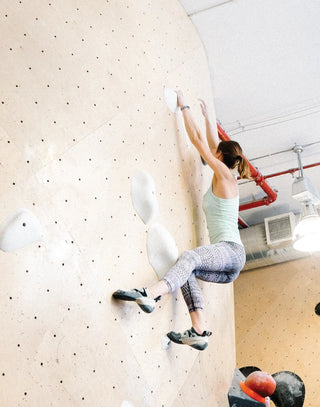
Ask a group of new climbers why they fell off a route, and you'll hear the same answer over and over again.
"My grip gave out."
Sometimes that's true.
But often, it isn't.
Grip strength has become one of the most talked-about aspects of climbing because it's easy to notice. When your forearms feel pumped and your fingers feel tired, it's natural to assume stronger hands would solve the problem.
The reality is usually more complicated.
For many climbers, especially those early in their climbing journey, grip strength is often the symptom rather than the cause.
And understanding that distinction can completely change how someone approaches improvement.
Why Grip Strength Gets So Much Attention
Climbing is one of the few sports where your hands are constantly engaged.
You're holding holds, pulling through movements, and supporting your body weight in ways that feel unfamiliar to most people.
After a climbing session, it's normal to notice sore forearms long before anything else.
That creates a simple assumption:
If my hands are tired, I must need stronger hands.
It's logical.
It's also only part of the story.
Experienced climbers certainly develop impressive grip strength over time. But many would tell you that technique improved their climbing long before grip strength did.
Most Beginners Misdiagnose the Problem
One of the easiest ways to spot a beginner is by how hard they're gripping every hold.
Not because they're doing anything wrong intentionally.
They're simply trying to feel secure.
When movement feels uncertain, people naturally squeeze harder.
The problem is that excessive grip tension drains energy quickly.
At Las Rocas Climbing & Fitness in South Miami, newer climbers are often surprised when coaches point out how much effort they're using on holds that require very little force.
Sometimes the biggest improvement doesn't come from stronger fingers.
It comes from learning how to relax.
Footwork Usually Fails Before Grip Strength Does
This is where climbing becomes interesting.
Many climbers blame their hands when the actual issue started several moves earlier.
Poor foot placement often forces climbers to compensate with their upper body.
Instead of standing efficiently on their feet, they hang from their hands longer than necessary. That extra effort accumulates quickly.
The result?
Forearms become exhausted and grip strength appears to be the problem.
In reality, the root cause was inefficient movement lower on the wall.
This is one reason good rock climbing classes focus heavily on footwork and body positioning rather than simply building strength.
Better movement often creates immediate improvements in endurance.
Movement Efficiency Conserves More Energy Than Stronger Hands
Watch experienced climbers and one thing becomes obvious.
They rarely look rushed.
They pause when needed. They shift their weight deliberately. They move with purpose instead of reacting impulsively.
That efficiency matters.
A climber who wastes energy on every move will always need more grip strength than someone who climbs efficiently.
For many climbers throughout Coral Gables, Pinecrest, and Coconut Grove, learning how to move better creates faster progress than any grip-specific training program.
That's because movement efficiency improves every aspect of climbing simultaneously.
Strength Still Matters — Just Not in the Way People Think
This doesn't mean strength is irrelevant.
Far from it.
Strength plays an important role in climbing performance, especially as climbers begin tackling more challenging routes.
The difference is that useful climbing strength extends beyond fingers and forearms.
Strong climbers often develop:
-
core stability
-
pulling strength
-
shoulder control
-
balance
-
movement coordination
This is why many climbers benefit from functional fitness for climbers and structured weight training for climbers rather than focusing exclusively on grip exercises.
The goal isn't simply stronger hands.
It's a stronger movement system.
Recovery Often Gets Ignored in the Conversation
Another factor people overlook is recovery.
Tired muscles rarely perform well.
Many climbers assume every performance issue requires more training when sometimes the body simply needs more recovery.
Mobility work, yoga, sauna sessions, cold plunge therapy, and proper rest all contribute to better movement quality over time.
As discussed in our recovery-focused articles, the climbers who improve most consistently are often the ones who balance training with recovery effectively.
More effort isn't always the answer.
Sometimes better recovery is.
The Best Climbers Combine Technique, Fitness, and Strength
One of the interesting things about climbing is that improvement rarely comes from a single area.
The strongest climbers usually develop multiple skills simultaneously:
-
efficient movement
-
strong footwork
-
climbing-specific fitness
-
mobility
-
recovery habits
-
grip strength
That's why climbing progression often feels different from traditional fitness goals.
People improve because multiple pieces start working together.
Focusing on only one variable rarely produces the results people expect.
What Most Climbers Eventually Discover
The longer people climb, the less they obsess over grip strength.
Not because it stops mattering.
But because they realize climbing is far more nuanced than they initially thought.
Routes that once felt impossible become manageable not simply because fingers became stronger, but because movement became more efficient.
The climbers who progress furthest are usually the ones who stop asking, "How can I grip harder?" and start asking, "How can I move better?"
That shift tends to change everything.
Ready to Build Strength That Actually Helps Your Climbing?
If you're looking to improve climbing performance, the answer is rarely just stronger hands.
Las Rocas Climbing & Fitness combines climbing, functional fitness, yoga, and recovery amenities to help climbers build the complete foundation needed for long-term progress.
Whether you're working on technique, strength, endurance, or overall fitness, having the right environment makes a difference.
Visit us at 9600 S Dixie Hwy, South Miami and discover why many climbers find progress comes faster when training focuses on the whole athlete, not just one muscle group.
→ Explore Membership Options and Start Climbing Smarter Today
