
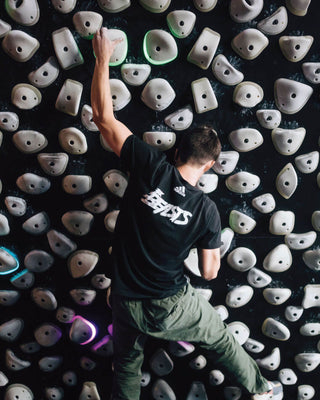
One of the fastest ways to spot a new climber has nothing to do with how high they climb.
It's how tired they look after a route.
Most beginners come down from the wall convinced they need stronger arms. Meanwhile, experienced climbers watching from the ground can usually see something else entirely.
The problem often isn't strength.
It's a movement.
Climbing has a way of exposing habits people don't even realize they have. Rushing through decisions. Holding tension unnecessarily. Ignoring footholds that could make a route dramatically easier.
The good news is that most beginner mistakes are completely fixable.
In fact, they're so common that nearly every experienced climber made them at some point too.
Trying to Climb With Your Arms Instead of Your Legs
This is probably the most common mistake beginners make.
People look at a climbing wall and naturally assume success comes from pulling themselves upward.
So they do exactly that.
They pull harder. Grip tighter. Use their upper body for nearly every movement.
The result is usually the same: exhausted forearms and a route that feels far harder than it should.
Experienced climbers understand something that beginners are still learning.
Legs are usually the engine.
Strong foot placement and efficient lower-body movement allow climbers to conserve energy while maintaining balance. Arms still matter, but their role is often smaller than people expect.
At Las Rocas Climbing & Fitness in South Miami, one of the biggest breakthroughs newer climbers experience is learning how much easier routes feel once they trust their feet.
Gripping Every Hold Too Hard
Watch a beginner climb and you'll often see white knuckles within the first few minutes.
It's completely understandable.
When people feel uncertain, they squeeze harder.
The problem is that excessive grip tension drains energy quickly.
Many holds require far less force than beginners assume.
Experienced climbers often appear relaxed because they're constantly evaluating how much effort is actually necessary. They're conserving energy whenever possible.
Learning to climb with less tension takes practice, but it also creates one of the fastest improvements in endurance.
And honestly, it's something most people don't fully understand until they experience it firsthand.
Moving Too Quickly Through Routes
A surprising number of beginners climb as if they're racing the wall.
The moment they leave the ground, they start moving rapidly from hold to hold.
Usually, this isn't confidence.
It's uncomfortable.
People often rush because stopping feels more intimidating than continuing.
But climbing rewards patience.
The strongest climbers aren't necessarily the fastest climbers. They're often the ones who pause, assess movement, and make deliberate decisions.
Slowing down creates opportunities to:
-
rest
-
evaluate options
-
improve balance
-
conserve energy
For many newer climbers throughout Coral Gables, Pinecrest, and Coconut Grove, simply reducing speed can make an immediate difference.
Looking Up Instead of Looking Down
Most beginners spend the entire climb looking at the next handhold.
That's understandable.
The challenge is that climbing often starts from the feet.
Experienced climbers constantly search for footholds because efficient foot placement determines how easy the next movement will feel.
New climbers often miss excellent footholds because they're focused entirely on what's above them.
That creates unnecessary strain on the upper body and makes routes feel much harder than they actually are.
One small adjustment many coaches teach is simple:
Before reaching for the next hold, look at where your feet can go first.
The difference is often surprising.
Avoiding Routes That Feel Difficult
This mistake tends to appear after people gain a little confidence.
They find routes they enjoy, become comfortable climbing them, and then avoid anything that feels uncertain.
It's human nature.
Most people prefer activities where they feel successful.
The challenge is that improvement usually happens just outside that comfort zone.
This doesn't mean beginners should jump onto routes far beyond their ability level.
It simply means occasional struggle is part of learning.
Many of the climbers who progress fastest are not necessarily the most talented. They're often the ones willing to spend time working through movements that don't come naturally right away.
Good Instruction Helps People Avoid Months of Trial and Error
One reason climbing classes exist is because many beginner mistakes are difficult to identify independently.
People often don't realize they're:
-
over-gripping
-
climbing too fast
-
ignoring footholds
-
relying too heavily on upper-body strength
Without feedback, those habits can stick around for months.
That's why structured rock climbing classes and coaching tend to accelerate progress so significantly.
As discussed in our guide on how to choose the right rock climbing class to improve technique, good instruction isn't about making people stronger overnight.
It's about helping people recognize movement patterns earlier.
And that usually makes climbing far more enjoyable.
Why Most Beginner Mistakes Are Completely Normal
The interesting thing about climbing is that nearly every experienced climber can remember making these exact mistakes.
Nobody starts with perfect footwork.
Nobody arrives knowing how to pace movement efficiently.
Nobody immediately understands how much technique matters.
That's part of what makes climbing rewarding.
Progress feels earned because improvement comes from learning, not just effort.
The mistakes beginners make today often become the lessons they laugh about a year from now.
Want to Learn Faster Without the Frustration?
The fastest way to improve isn't necessarily climbing harder routes.
It's learning how to move better.
Las Rocas Climbing & Fitness offers beginner-friendly rock climbing classes, coaching, and a supportive climbing community for climbers throughout South Miami, Coral Gables, Pinecrest, and Coconut Grove.
Whether you're completely new to climbing or looking to improve technique, having experienced instructors and a welcoming environment can make the learning process much smoother.
→ Come Visit Us at Las Rocas, or Explore Our Website to Get Started
