
Weight training and climbing have a complicated relationship. Done right, supplemental strength work can meaningfully accelerate your progress on the wall. Done wrong — and a lot of climbers do this — it can actually make you worse.
The problem is most weight training advice is designed for bodybuilders or general athletes, not climbers. Climbing is a coordination and movement sport first, and a strength sport second. That changes what you should be doing in the gym.
The Goal Isn't Just to Get Stronger
This is the fundamental mindset shift: you're not training to build bigger muscles. You're training to build strength that transfers to movement on the wall.
Isolated hypertrophy — the kind you get from machines that move in a fixed plane — doesn't translate well to climbing. What does transfer is strength built through coordinated, multi-joint movements under real load. That's why compound exercises are the foundation of any good climbing-specific strength program.
The Exercises That Actually Help
Pull-Ups (and Variations)
The closest thing to a non-negotiable for climbers. Pull-ups build the vertical pulling strength that climbing is built on — lats, biceps, rear deltoids, and grip, all in one movement.
Progress systematically: bodyweight → weighted → one-arm assisted. Don't rush to add weight before your form is solid.
Deadlifts
Climbers chronically underuse their posterior chain — the back, glutes, and hamstrings. Deadlifts fix that. They also build the full-body tension and bracing that makes everything else more efficient on the wall.
Keep weight moderate and focus on form. You're not training for a powerlifting meet.
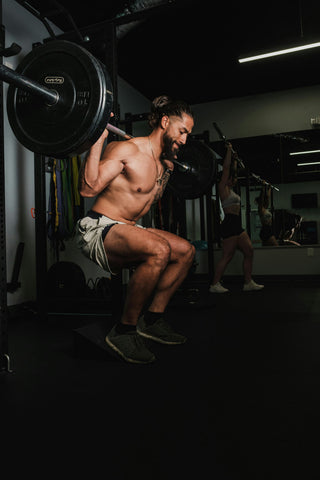
Squats and Single-Leg Variations
Your legs provide the pushing power that experienced climbers rely on to preserve arm strength. Bulgarian split squats and step-ups are particularly useful because they train one leg at a time — which more closely mirrors what actually happens on a climbing wall.
Overhead Press
Shoulder stability is one of the most common weak points in climbers, and one of the most common injury sites. Regular overhead pressing builds the rotator cuff and deltoid strength that keeps your shoulders healthy under load.
Grip Strength: Important, But Be Careful
Grip strength matters. But the tendons and pulleys in your fingers adapt much more slowly than your muscles — which means aggressive grip training is one of the fastest ways to get a pulley injury that sidelines you for months.
Guidelines:
-
Let climbing itself build your grip for the first 6–12 months
-
Add dead hangs carefully once your fingers feel adapted
-
Never train grip to failure — stop well short of your limit
-
If a finger hurts during or after training, back off immediately
Core Work for Climbing
The core work that helps climbers most isn't about aesthetics — it's about body tension. The ability to keep your body rigid and controlled while hanging on small holds is what separates intermediate from advanced climbing.
-
Hollow body holds — the foundational body tension exercise
-
Dead bugs — core control while limbs move independently
-
Anti-rotation exercises (Pallof press) — resisting twist under load
Avoid excessive crunches and sit-ups. They don't train the stability patterns climbing demands.
How to Structure It
A sustainable approach for most climbing-focused athletes:
-
Climb 2–3 days per week as your primary training
-
Add 1–2 short strength sessions (45 min max) on non-climbing days
-
Keep intensity moderate — you're supplementing climbing, not competing with it for recovery
-
Take at least one full rest day per week
More is not always better. Overtraining is a real risk when you're combining climbing with strength work.
What to Avoid
-
Bicep curls as your primary pulling work — not enough range of motion for climbing
-
Heavy lat pulldowns with bad form — shoulder injury risk
-
Neglecting legs and hips — you'll plateau faster
-
Skipping mobility work — strength without flexibility creates injury risk
-
Going to failure on grip exercises — tendon health is everything
Ready to try it for yourself?
Come experience Las Rocas Climbing & Fitness at 9600 S Dixie Hwy, South Miami. First-timers get a free day pass — no commitment, no pressure. Just show up and climb.
